Written by Mikko Karjanlahti, Country Manager at Kustom Finland
Finland is home to exceptionally innovative e-commerce companies. The products are top-notch, the brands are growing rapidly, and digital marketing is on a par with international standards. Yet growth—both domestically and internationally—can come to a halt at a surprisingly mundane point: the checkout. Every abandoned purchase represents lost revenue that goes to a competitor.
Checkout is still too often viewed as merely a payment step—a mandatory technical step before order confirmation. In reality, it’s about much more than that. Ironically, despite its critical importance, this stage is often strategically undervalued.
At Kustom, we view the checkout as a pivotal moment: it’s where the customer makes the final purchase decision, and the company either delivers on its promise or loses the customer. This is the stage where trust is built—and it is precisely this trust that forms the foundation for conversion, customer loyalty, and ultimately international growth.
Checkout isn’t a payment method—it’s a lever for growth
Developing the checkout process isn’t just about the technical implementation of payment methods—it’s a strategic choice: will the checkout be a bottleneck or a catalyst for growth?
A well-designed checkout process not only completes the purchase but also supports the online retailer’s growth strategy. It adapts to different markets, accommodates local payment methods, and reduces friction at the most critical stage of the purchase journey.
More and more often, pioneering e-commerce retailers are switching to modular solutions in which the checkout is not a fixed, locked-in entity, but rather a flexible part of the business. This enables faster development, better localization, and the freedom to choose the right partners for each market.
When the checkout experience runs smoothly, customers don’t have to hesitate, and the purchasing decision proceeds naturally without any unnecessary obstacles.
International expansion exposes weaknesses in the checkout process
Finnish e-commerce businesses are used to thriving in the domestic market. Consumer behavior is familiar, payment methods are well-established, and regulations are predictable. It’s great that more and more retailers are seeking growth abroad. As they turn their attention overseas, this also creates new demands on the checkout process—and the playing field is changing.
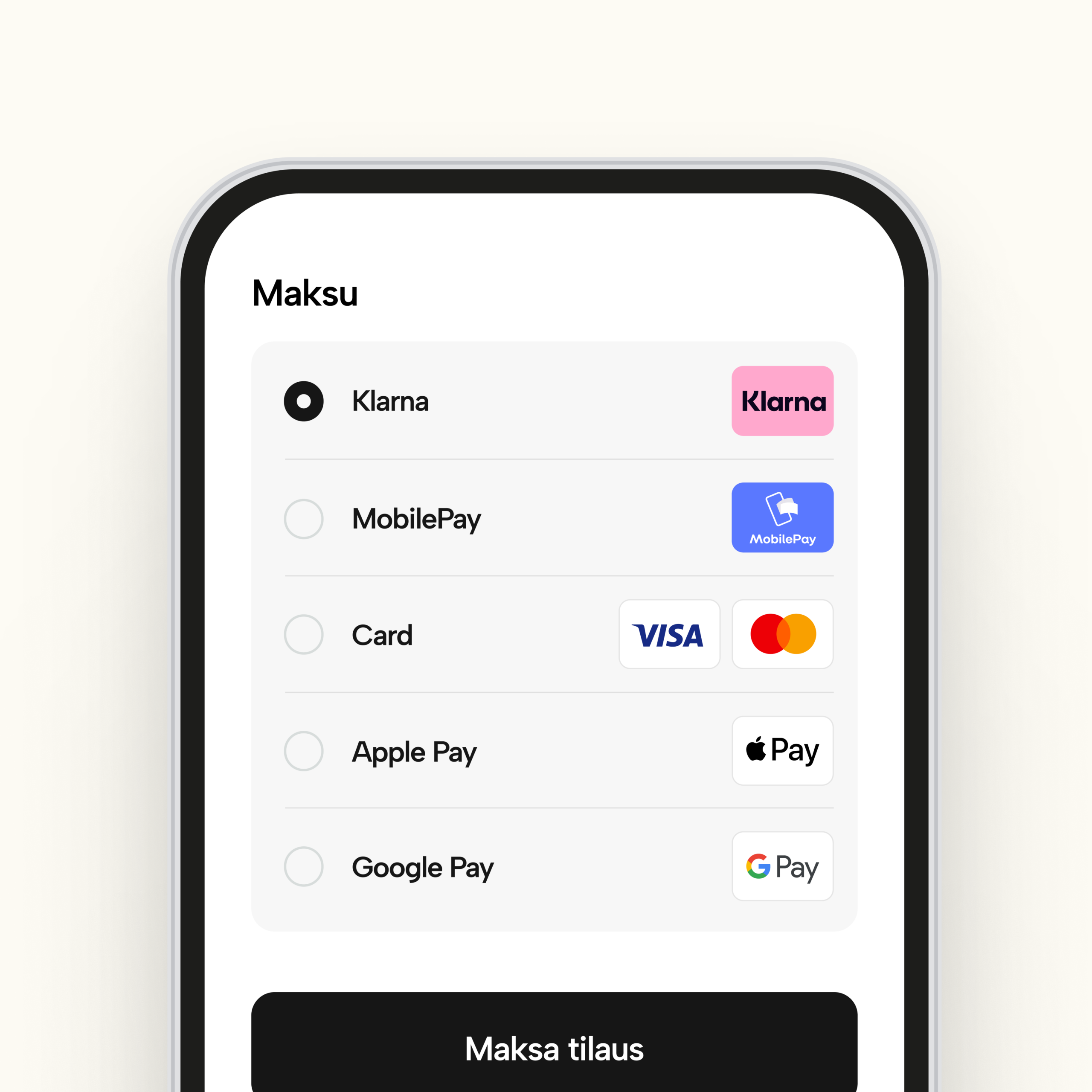
Payment methods work differently in different markets: in one country, invoices are preferred, while in another, mobile payments are favored. In some places, people want to complete a purchase with a single click, while in others, strong authentication is emphasized. In addition, local regulatory requirements, currencies, languages, and cultural expectations all come into play.
If the checkout process is built solely based on the conditions of the domestic market or tightly tied to a single ecosystem, its limitations quickly become apparent: adaptation becomes more difficult, localization slows down, and scaling becomes more expensive. This manifests as friction in the purchase journey, abandoned carts, and a steady drain of conversions to competitors.
Europe Offers Growth—If Checkout Keeps Up
Europe is a natural growth market for Finnish online retailers, but it is not a single market—rather, it is a collection of different cultures and online shopping habits.
In some countries, the emphasis is on speed and a seamless experience, while in others, it’s on paying after delivery. In the Netherlands, for example, as much as 70% of payments are made through the local iDEAL payment method. If the checkout process does not meet these local expectations regarding payment methods, shipping options, or the information provided, conversion rates will inevitably fall short.
In the past, this type of localization has been slow and fragmented; each market has required separate integrations and agreements.
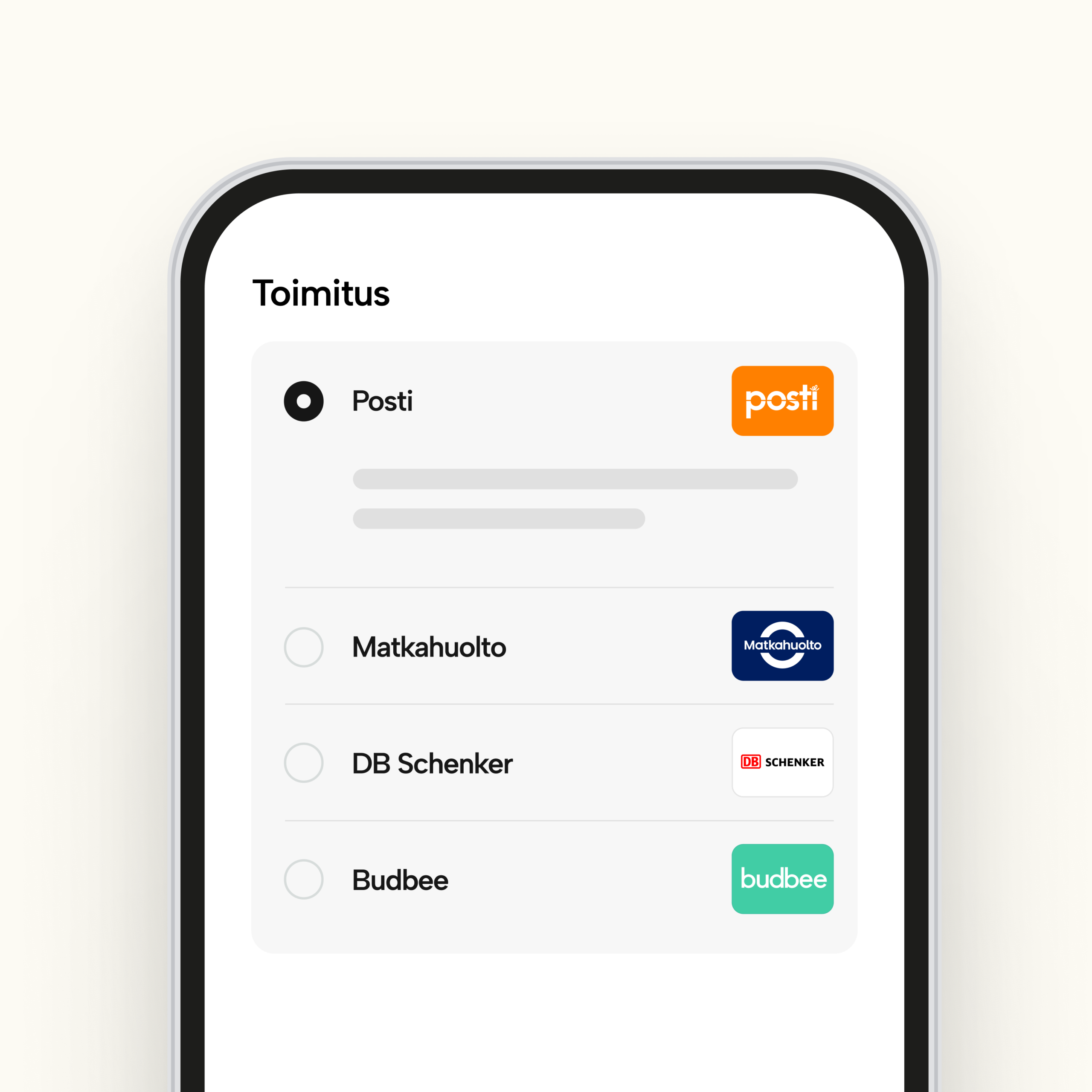
Kustom Checkout embodies this trend, and for the first time, merchants now have access to a modular checkout solution that works with most e-commerce platforms. A single contract and a single integration make it possible to launch a localized checkout throughout Europe, including payment methods and currencies.
Now, the situation is changing thanks to more flexible and open solutions. Instead of building a separate solution for each market, an e-commerce merchant can scale with a single integration that supports local payment methods, currencies, and requirements—without losing control or locking themselves into a single provider.
Kustom Checkout was built specifically for this purpose: A single contract and a single integration enable a localized checkout experience throughout Europe. That’s why now is the perfect time to expand.
Checkout data is the most underutilized resource in e-commerce
Most online retailers know what sells. Far fewer, however, understand why customers buy—or why they choose not to buy.
Although there is more data than ever before, it is often scattered across analytics tools, payment services, CRM systems, and logistics. Gaining a comprehensive view requires time, resources, and, above all, complex data integration.
At the same time, the most valuable data is generated at checkout—the moment when true customer behavior is revealed. It’s increasingly important to ensure that this data is accessible and doesn’t get trapped in silos within closed systems. Failing to leverage it directly translates to lost conversions and revenue.
At the same time, artificial intelligence opens up entirely new possibilities for the checkout process in terms of customer insight, personalization, and optimization—trends that will become increasingly prominent in the near future, and Kustom is firmly at the forefront of these developments. Those who seize these opportunities first will also gain a competitive advantage.
In conclusion
No online store has achieved significant growth and success simply because its checkout and purchasing process has been well localized and optimized. Instead, many fall short of their goals precisely because their checkout is poorly designed or too rigid to support international growth.
Ultimately, success in international e-commerce isn’t determined solely by the product, the brand, or marketing—but rather at the moment when the customer decides whether to buy or not.
And surprisingly often, that moment happens at the register, where every moment of hesitation can mean that revenue flows straight into a competitor’s register.
Read here to learn how you can increase conversions, expand internationally, and build a better customer experience in all markets with Kustom.